


Porcelain Veneers vs Teeth Whitening: Key Differences
Dr. Melody Khonsari
June 4, 2026

Two of the most recognized options in cosmetic dentistry, namely porcelain veneers and teeth whitening, often come up in the same conversation. Both are aimed at improving the appearance of your smile, but they work in fundamentally different ways, address different kinds of concerns, and represent very different levels of commitment in terms of cost, procedure, and longevity.
If you're trying to understand which option makes more sense for your smile goals, this comparison is designed to give you a clear and honest picture of both so that you can walk into any consultation with a dentist feeling well prepared.
What Teeth Whitening Does
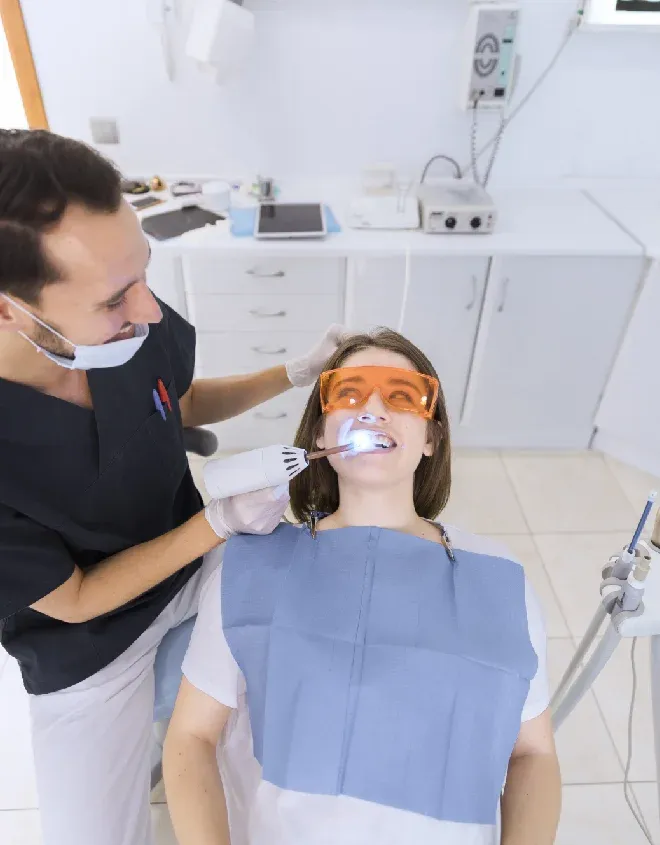
Teeth whitening is a cosmetic procedure that lightens the color of natural tooth enamel using a peroxide-based bleaching agent. The active ingredient, which is typically hydrogen peroxide or carbamide peroxide, penetrates the outer enamel layer and chemically breaks down discoloration-causing compounds.
Professional in office whitening uses higher concentration gel under controlled conditions, often producing noticeable results in a single visit. Take home whitening systems use custom trays and a lower strength gel for gradual improvement over one to two weeks. Both approaches are considered safe when used as directed under dental supervision.
What whitening does well is that it addresses extrinsic staining from food, beverages, and tobacco. What it cannot do is that it doesn't change tooth shape, repair chips, close gaps, or treat intrinsic discoloration, which is staining that originates inside the tooth from factors like certain medications, excessive fluoride exposure, or natural aging of dentin.
What Porcelain Veneers Do
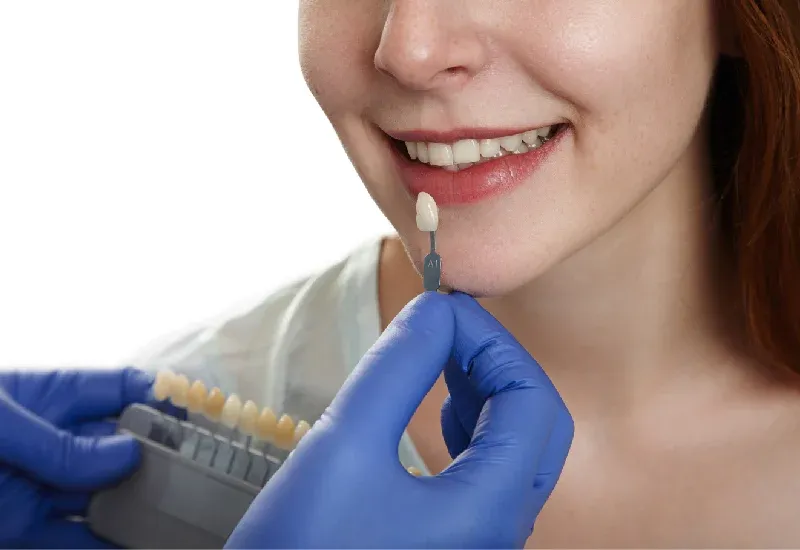
Porcelain veneers are thin, custom made ceramic shells that are permanently bonded to the front surfaces of teeth. They can change not just the color of a tooth but also its shape, size, and surface texture. Because they are fabricated in a dental laboratory from impressions or digital scans of your teeth, each veneer is precisely designed to fit and complement your overall smile.
Veneers can address a much wider range of cosmetic concerns in one treatment including severe or intrinsic discoloration that doesn't respond to whitening, chips or cracks, slightly uneven or differently sized teeth, minor gaps, and teeth with irregular surface texture. The result is a cohesive and uniform smile transformation that whitening alone simply cannot deliver.
The trade off is that veneers require preparation of the tooth surface because a thin layer of enamel must be removed to allow the veneer to sit flush and natural looking. This makes the process irreversible.
| Feature | Porcelain Veneers | Teeth Whitening |
|---|---|---|
| Changes tooth color | Yes | Yes |
| Changes tooth shape | Yes | No |
| Fixes chips, cracks & closes small gaps | Yes | No |
| Treatment visits needed | 2 to 3 | 1 in office or 1 to 2 take home |
| Longevity | 10 to 20 years | 6 months to 2 years |
| Stain resistance | High | Low |
| Reversible | No | Yes |
| Cost | Higher | Lower |
| Tooth preparation required | Yes with enamel removal | No |
When Whitening Is the Appropriate Starting Point
Teeth whitening is well suited for patients whose teeth are in good structural shape with no chips, minimal irregularities, and normal sizing and whose primary concern is color. If the staining is extrinsic and the teeth are otherwise healthy and well-proportioned, whitening can deliver meaningful, fast, and cost-effective results.
It's also a natural starting point for patients who want to brighten their smile before deciding whether more comprehensive cosmetic work is needed. Seeing how whitening changes your overall appearance can help clarify whether you're satisfied with the result or whether you'd like to explore further options.
When Veneers Make More Sense
Porcelain veneers become the more appropriate option when there are multiple cosmetic concerns to address at once, when the discoloration is intrinsic and doesn't respond to whitening, or when the patient wants a longer lasting solution that doesn't require periodic retreatment.
Veneers are also the preferred approach when shape, size, or minor alignment irregularities are part of the patient's concerns since whitening alone will leave those aspects unchanged. A patient who brightens their smile with whitening but still sees a chipped front tooth or a noticeable gap will likely find that veneers provide a more complete result.

"Porcelain veneers have a reported 10-year survival rate of approximately 93 to 95 percent when placed on structurally sound teeth and maintained with consistent oral hygiene."
FAQ
Still have a Question? Contact Us
Whitening products do not change the color of porcelain veneers. If the natural teeth around your veneers have yellowed, your dentist may recommend whitening the natural teeth to match, or eventually replacing the veneers if there is a significant color discrepancy.
Conclusion
Porcelain veneers and teeth whitening both have a meaningful role in cosmetic dentistry. The key is matching the right treatment to the right patient and the right concern. Whitening is an accessible, reversible, and cost effective option for improving tooth color when the underlying teeth are structurally sound. Veneers offer a more comprehensive and durable solution when color is just one part of a broader smile transformation.
Contact your Dentist today in Studio City, Dr. Melody Khonsari, at One Dental Studio City, to learn more about the key differences between Porcelain Veneers and Teeth Whitening.
This article is for informational purposes only and does not constitute dental or medical advice. Please consult a licensed dental professional for a personalized evaluation and treatment plan.
Resource
Disclaimer
This media/content or any other on this website does not prescribe, recommend, or prevent any treatment or procedure. Therefore, we highly recommend that you get the advice of a qualified dentist or other medical practitioners regarding your specific dental condition.